
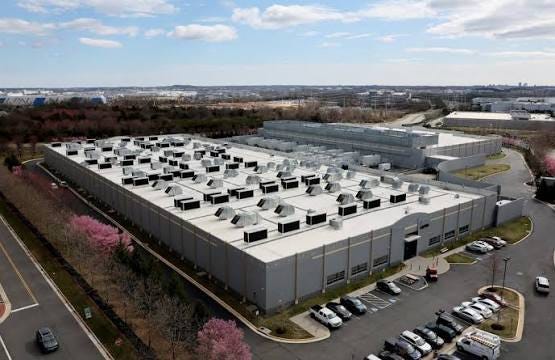
Texas is at the center of America’s data center explosion, fueled by surging demand for artificial intelligence and cloud computing. With hundreds of facilities already operating and more than 100 in planning or development, the state is on track to become a national leader in the sector. Yet this rapid growth has strained the Electric Reliability Council of Texas (ERCOT) grid, prompting lawmakers to act.
In June 2025, Governor Greg Abbott signed Senate Bill 6 (SB 6), authored by Sen. Phil King (R-Weatherford). The legislation, which took effect immediately, establishes a regulatory framework for “large loads” — electricity customers with peak demand of 75 megawatts (MW) or more at a single site. While aimed at supporting economic development, SB 6 introduces guardrails to prevent grid overload, minimize stranded infrastructure costs, and protect ordinary ratepayers from bearing the full burden of upgrades.
The Scale of the Challenge: ERCOT’s Massive Large Load Queue
As of late March 2026, ERCOT is tracking approximately 410 GW of large load interconnection requests — a figure that dwarfs the state’s current peak demand of roughly 85–90 GW. About 87% of these requests come from data centers, many tied to AI infrastructure. The queue has ballooned rapidly, with a surge of nearly 150 GW in a matter of weeks earlier this year, driven largely by submissions through Oncor Electric Delivery.
This unprecedented pipeline has exposed flaws in the old single-project study process, which led to frequent “restudies,” delays, and uncertainty. Only a small portion of queued projects have energized so far, but the potential strain on transmission, reliability, and resources like water is significant.
Key Provisions of Senate Bill 6
SB 6 directs the Public Utility Commission of Texas (PUCT) and ERCOT to overhaul how large loads connect to and operate on the grid. Major elements include:
• Interconnection Standards and Cost Responsibility: Large loads must contribute to the costs of connecting to the grid, including direct interconnection facilities. The goal is to support business growth while avoiding “stranded” upgrades that might not be fully utilized.
• Financial Commitments: Developers face study fees (at least $100,000 in some cases), non-refundable interconnection fees, and security deposits to demonstrate project viability and deter speculative queue-crashing.
• Forecasting and Planning: ERCOT must improve large load forecasting for transmission and resource adequacy studies. Customers are required to provide detailed milestones and site information.
• Emergency Operations and Curtailment: New large loads (interconnected after December 31, 2025) at transmission voltage must install equipment allowing remote curtailment or disconnection during firm load shed events, after market options are exhausted. On-site backup generation (capable of serving at least 50% of load without exporting to the grid) must be disclosed, and ERCOT gains limited authority to dispatch it in emergencies.
• Co-Located (Behind-the-Meter) Generation Rules: Restrictions apply to pairing new large loads with existing grid-connected generation. Certain arrangements require ERCOT study and PUCT approval, with exemptions for legacy ownership structures.
• Demand Management: Development of competitively procured reliability services for voluntary or mandatory load reductions from large customers.
The bill also calls for a review of transmission cost allocation to ensure large loads pay their fair share rather than socializing costs across all ratepayers.
PUCT has advanced SB 6 through multiple rulemakings, including Project No. 58481 (large load interconnection standards) and others covering forecasting, net metering, and reliability services. In March 2026, the Commission published a draft rule (16 TAC §25.194) proposing stiff requirements: non-refundable fees of $50,000–$100,000 per MW in some scenarios, substantial financial security (with potential forfeiture for delays or withdrawals), site control documentation, and disclosures of parallel or affiliate projects. Initial comments on the draft were due in mid-April 2026.
ERCOT has shifted to a Batch Study Process for the large load queue, grouping projects for more efficient analysis every six months or so. This addresses the restudy loop and aims to provide greater certainty. “Batch Zero” efforts are underway to begin clearing the backlog.
At the Texas House Committee on State Affairs hearing on April 9, 2026 — chaired by Rep. Ken King (R-Canadian) — ERCOT President & CEO Pablo Vegas and PUCT Chairman Thomas Gleeson testified alongside data center industry representatives. The session highlighted the queue’s scale, implementation of SB 6, potential for co-located resources to bolster resilience, and broader issues like water use and workforce needs. Rep. King signaled that data centers would remain a focus, with additional hearings — including one with public testimony — expected soon.
Trade-Offs and Stakeholder Perspectives
Data center developers argue that Texas’s pro-business environment, combined with clearer rules, will attract massive investment and jobs while positioning the state as an AI powerhouse. They emphasize economic multipliers and innovations in flexible, curtailable operations or on-site generation.
Critics and regulators worry about reliability risks, potential cost shifts to residential and small commercial customers, water consumption in drought-prone areas, and whether tax incentives deliver sufficient public benefits. Public comments submitted for hearings have raised concerns about projects near neighborhoods, farmland conversion, and the sheer scale of proposed subsidies versus returns.
Final rules under SB 6 are expected throughout 2026, with full implementation shaping how — and how quickly — data centers expand in Texas. The legislation represents a pragmatic middle path: welcoming growth while imposing structure on a previously fragmented process.
As Texas navigates its role in the global AI economy, SB 6 and the ongoing legislative oversight (including Rep. King’s committee work) will determine whether the state can power the future without compromising the lights for everyone else.