

In the rapidly evolving world of cryptocurrency, few entities have sparked as much debate as Tether (USDT), the world's largest stablecoin with over $180 billion in circulation. Recent discussions have highlighted its deep ties to traditional finance powerhouse Cantor Fitzgerald, as well as lingering controversies involving co-founders and high-profile figures like Jeffrey Epstein…
Cantor Fitzgerald has emerged as a pivotal player in Tether's operations since around 2021, serving as the primary custodian for the majority of Tether's reserves, which are predominantly held in U.S. Treasuries. This arrangement has been instrumental in addressing longstanding doubts about Tether's backing and transparency. Brandon Lutnick, son of Howard Lutnick and current Chairman and CEO of Cantor Fitzgerald, personally verified Tether's reserves in the early stages, providing a much-needed boost to its credibility.
Beyond custodianship, Cantor's involvement extends to significant financial stakes. The firm acquired approximately 5% of Tether Holdings through convertible debt and investments totaling around $600 million. Should Tether achieve its ambitious valuation targets—discussed in fundraising efforts between 2025 and 2026—of up to $500 billion, Cantor's stake could potentially balloon to billions, with some estimates reaching as high as $25 billion.
These ties not only generate fees for Cantor but also position the firm at the forefront of cryptocurrency's integration with traditional finance (TradFi). The collaboration has helped legitimize Tether's massive reserves, which include tens of billions in Treasuries, while offering Cantor substantial upside in the crypto sector's expansion.
Leadership Endorsements and Major Collaborative Ventures
The Lutnick family's influence is central to this partnership. Howard Lutnick, former CEO of Cantor Fitzgerald and now U.S. Commerce Secretary, has been a vocal supporter of Tether for years. His son, Brandon, has publicly lauded the stablecoin, describing it as the "mainstay of the global digital dollar" amid its growth to over $180 billion in tokens.
In 2025, this alliance expanded into groundbreaking ventures. Cantor Fitzgerald, through its Cantor Equity Partners arm, teamed up with Tether, SoftBank, Bitfinex, and Strike CEO Jack Mallers to launch Twenty One—a Bitcoin-native company. Starting with over 42,000 BTC in holdings, Twenty One aims to compete with giants like MicroStrategy in Bitcoin accumulation and exposure strategies.
Ongoing collaborations include Cantor's advisory role in Tether deals, explorations into Bitcoin lending programs (potentially up to $2 billion), and support for Tether's U.S.-centric initiatives. A notable example is the 2026 launch of USA₮, a GENIUS Act-compliant stablecoin designed for U.S. markets and remittances. These efforts underscore the strengthening bridge between TradFi and crypto, despite persistent regulatory hurdles.
Brock Pierce: Tether's Co-Founder and Ties to Jeffrey Epstein
Brock Pierce, a former child actor known for roles in films like The Mighty Ducks, co-founded Tether in 2014 alongside Reeve Collins and Craig Sellars. As the first major USD-pegged stablecoin, Tether revolutionized crypto trading, particularly through its integration with the Bitfinex exchange. Pierce played a key role in its early vision but stepped away from active involvement around 2015. He holds no current position, ownership, or operational role in Tether Holdings, which is now led by CEO Paolo Ardoino.
Pierce's broader crypto legacy includes co-founding Blockchain Capital (an early venture capital firm), the EOS blockchain (via a massive ICO), Mastercoin (the first ICO), and serving as chair of the Bitcoin Foundation. An early investor in Bitcoin and Ethereum, he has shifted focus to blockchain, AI, and DePIN projects, such as backing Bit Digital's transition to an Ethereum treasury in 2025–2026.
However, controversy has resurfaced with the early February 2026 release of millions of pages from DOJ Epstein files. These documents reveal Pierce's extensive personal and professional connections to Jeffrey Epstein from 2011 to 2018 and beyond, post-Epstein's 2008 conviction. Key revelations include:
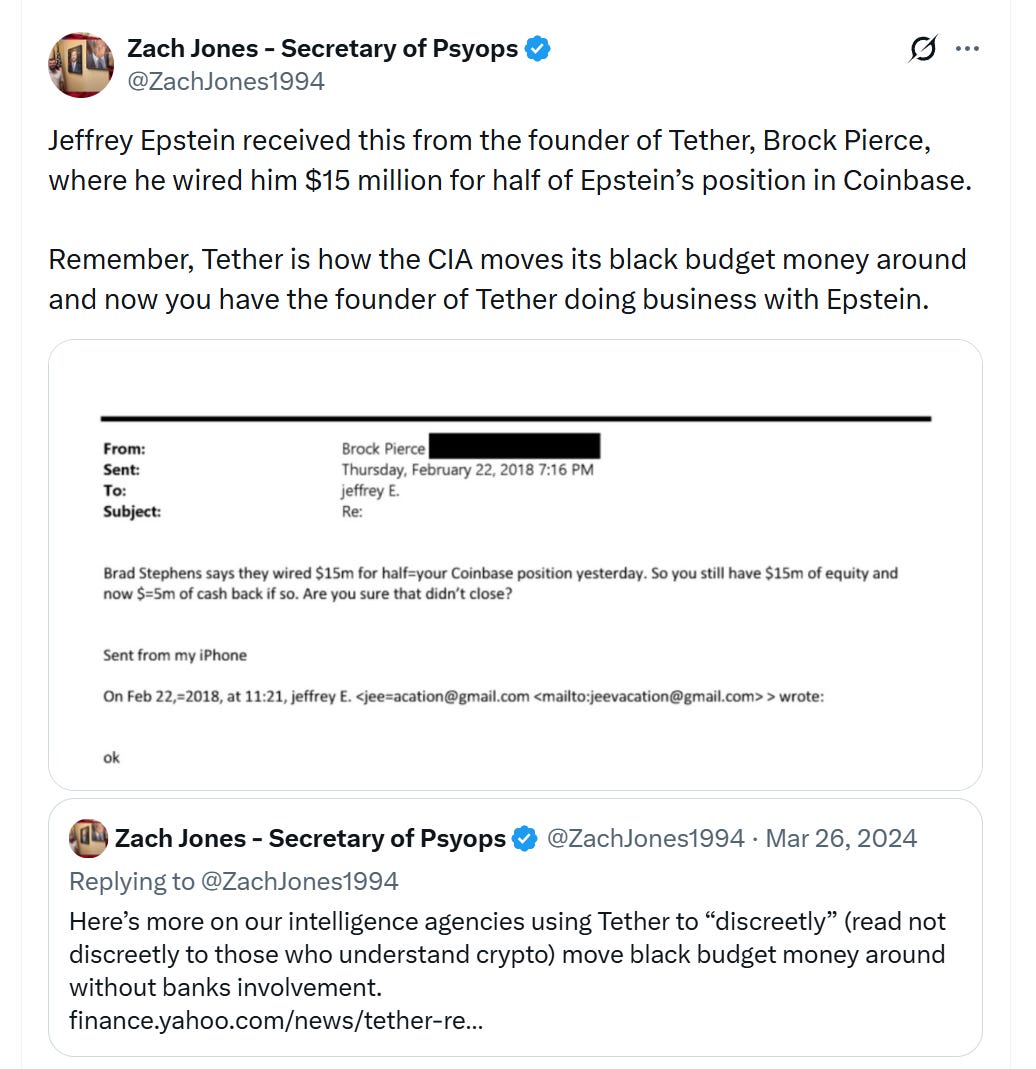
- Pierce brokering Epstein's $3 million investment in Coinbase's 2014 Series C round through Blockchain Capital (Epstein invested independently and later sold half his stake for approximately $15 million profit in 2018).
- Over 1,800 mentions of Pierce in the files, covering crypto discussions (e.g., Bitcoin demos at Epstein's mansion involving economist Larry Summers, potential introductions to the Winklevoss twins, and Mt. Gox-related plans), business networking, and troubling personal references (invitations involving travel, "girls," photos of women, and a "boat in Antigua full of Ukraine's finest").
- Pierce advising Epstein on other crypto investments, such as a $500,000 stake in Blockstream.
Importantly, there is no evidence that Epstein directly funded Tether's launch, reserves, or operations—the connections appear tied to Pierce's personal network rather than corporate involvement. A 2014 email mentions interest in involving Summers for "Noble Markets and Tether" to add legitimacy, but no follow-through is documented.
These disclosures have ignited speculation in crypto communities, amplifying longstanding criticisms of Tether as a potential "Trojan horse" for central bank digital currencies (CBDCs) or a tool for money laundering. Critics point to guilt by association with an early co-founder who exited long ago, while noting no proven links to Tether's current Treasury-backed reserves or daily operations.
senate Scrutiny: Howard Lutnick Under the Microscope
Howard Lutnick's nomination and confirmation as U.S. Commerce Secretary brought Tether's controversies into the congressional spotlight. During multiple Senate hearings in early 2026, Lutnick faced pointed questions about conflicts of interest, Tether's alleged role in illicit finance, and reserve transparency.
- Senate Commerce Committee Hearing (January 29, 2025): Chair Maria Cantwell questioned Lutnick on potential conflicts, Tether's use in money laundering and sanctions evasion, and backing opacity. Lutnick confirmed Cantor's "convertible bond" with Tether (stressing no equity stake) and pledged full divestment upon confirmation, which he completed by stepping down from Cantor roles. He defended stablecoins, noting that criminals also exploit USD cash, and advocated for AI-driven tracking of illicit crypto flows.
- Senate Banking Committee Letter from Elizabeth Warren: Warren labeled Tether the "outlaws' favorite cryptocurrency" due to its history of opacity and allegations of facilitating terror financing and North Korean hacks. She demanded details on due diligence, AML/KYC compliance, and any discussions with the Trump administration regarding Tether. Lutnick was grilled on his prior endorsements, such as claims of Tether being "fully backed" and liquid.
- Senate Appropriations Committee (February 2026): Senator Jack Reed pressed Lutnick on Tether's lack of a full independent audit despite Cantor's custodial role. Lutnick agreed that audits are generally advisable, reiterated his divestment, and distanced himself from ongoing operations. This occurred amid heightened scrutiny from Epstein file releases and Tether's pivot to compliant products like USA₮.
Throughout, Lutnick tempered his earlier bullish statements, clarifying they were accurate at the time but no longer reflecting continuous diligence. He emphasized Cantor's stabilizing influence on Tether and called for regulated stablecoins to mitigate risks. While these sessions sparked debates—critics highlighting red flags in conflicts and illicit use estimates in the billions, supporters viewing it as a path to sector legitimacy—no major issues derailed his confirmation.
Additional claims have circulated, including a quoted post suggesting Epstein received $15 million from Pierce for half of his Coinbase position, framing Tether as a vehicle for moving "black budget" money. Such narratives tie into broader theories of intelligence agency involvement, though they remain unsubstantiated beyond personal connections.
These revelations underscore the tensions in cryptocurrency's maturation. Tether's partnerships with firms like Cantor Fitzgerald represent a vital TradFi-crypto bridge, fostering growth and credibility. Yet, historical associations and regulatory gaps continue to fuel skepticism. As stablecoins like Tether push toward compliance—evidenced by initiatives like USA₮—the industry faces a critical juncture: balancing innovation with accountability to address illicit finance concerns and build broader trust.