
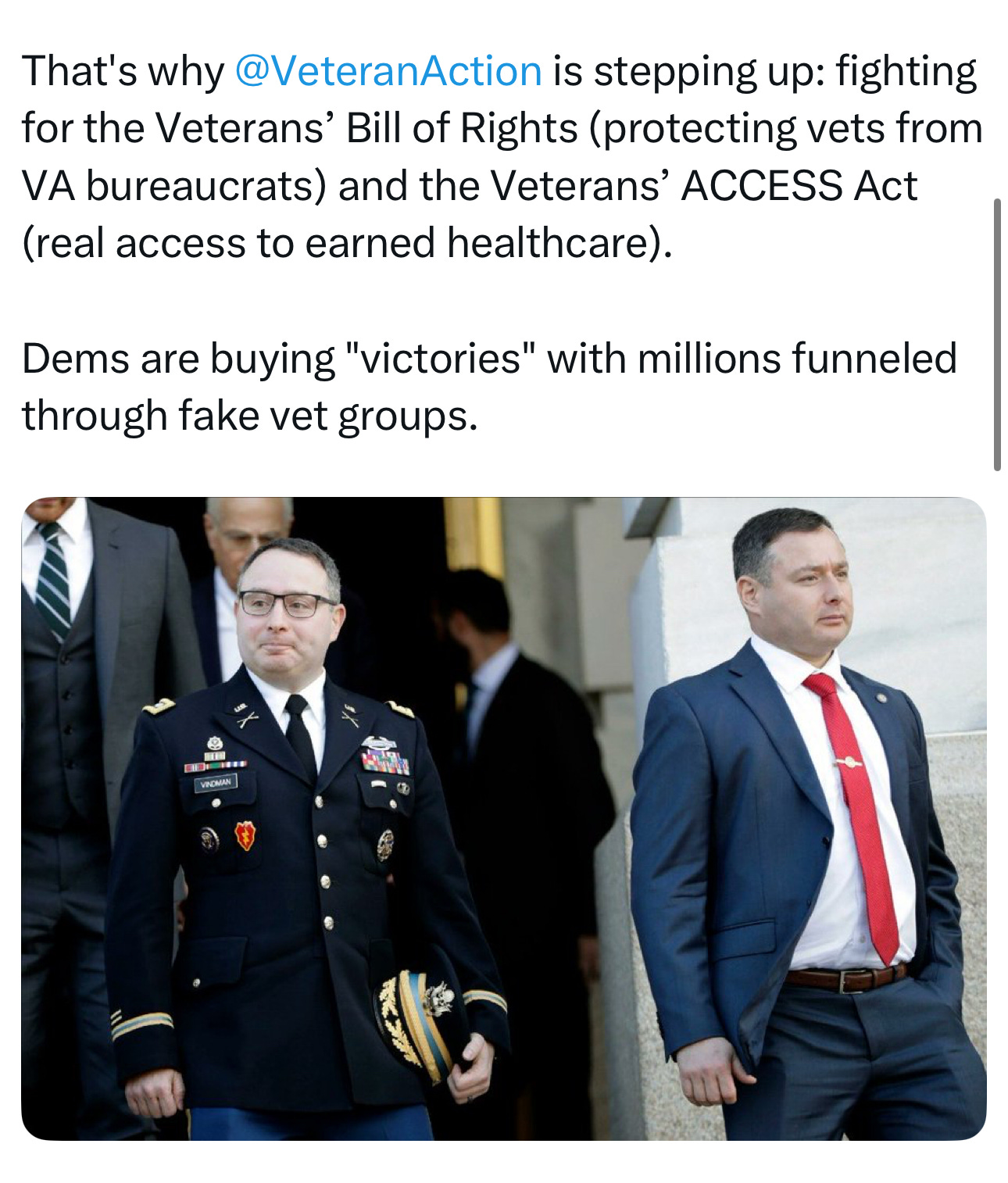
In a recent Twitter post, veteran advocate Mark Lucas, founder of Veteran Action, lambasted VoteVets.org as a “Soros-linked group” that pretends to champion veterans while advancing a left-wing agenda. The post highlights VoteVets’ role in a surprising Democratic victory in a Texas state Senate race and its association with Alexander Vindman, a key figure in Donald Trump’s first impeachment. Lucas argues that the organization prioritizes political disruption over genuine veteran support, including efforts to “retake the House in ’26, impeach Trump again, and reverse pro-veteran reforms.”
VoteVets.org, founded in 2006 by Iraq War veterans Jon Soltz and Jeremy Broussard, describes itself as the largest progressive organization of veterans in America, with over 700,000 supporters including veterans, military families, and civilians. Its mission focuses on electing veterans to public office—primarily Democrats—and advocating for issues like troop welfare, veterans’ care, and national security. The group operates through a political action committee (PAC) and a 501(c)(4) nonprofit, the VoteVets Action Fund, which allows it to engage in advocacy and limited political activities.
Critics, including Lucas, point to VoteVets’ funding as evidence of its partisan leanings. The organization has received significant contributions from Democratic-aligned entities, such as the House Majority PAC ($1.29 million in October 2024) and labor unions like the United Association of Journeymen and Apprentices of the Plumbing and Pipefitting Industry. Links to billionaire George Soros are indirect but notable: Soros’ Open Society Foundations have funded allied progressive groups, such as America Votes ($16.9 million in 2021) and others opposing voter integrity measures like the SAVE Act. While Soros himself has not directly donated to VoteVets, his network’s support for overlapping causes—such as combating voter suppression and promoting progressive policies—fuels accusations of influence. Defenders argue these funds enable advocacy on veterans’ issues, and VoteVets has also received donations from veterans like Jennifer Pritzker.
The post specifically calls out VoteVets’ $500,000 expenditure to back Democrat Taylor Rehmet in a special election for Texas Senate District 9, a seat in Tarrant County that Trump carried by 17 points in 2024. Rehmet, a union president, Air Force veteran, and first-time candidate, won the January 31, 2026, runoff against Republican Leigh Wambsganss by a 57%-43% margin, flipping a district no Democrat had held in nearly 50 years. Analysts attribute the upset to Rehmet’s working-class appeal, increased Latino voter turnout, and suburban backlash against GOP policies. Trump endorsed Wambsganss but distanced himself post-loss, blaming low Republican turnout. Rehmet’s win is for a partial term ending in early January 2027, with a full-term election set for November 2026.
Central to Lucas’ critique is Alexander Vindman, a retired U.S. Army lieutenant colonel who served as VoteVets’ senior advisor starting in 2022. Vindman gained national prominence as a National Security Council director who testified in Trump’s 2019 impeachment, alleging the president pressured Ukraine’s leader to investigate Joe Biden. Reassigned and later retiring, Vindman has authored books like Here, Right Matters and leads think tanks focused on national security. On January 27, 2026, he launched a Democratic Senate bid in Florida against GOP Sen. Ashley Moody, raising $1.7 million in the first 24 hours from over 36,000 donors. His campaign emphasizes affordability and anti-corruption, drawing on his military service and impeachment role. Critics like Lucas view this as part of a broader strategy to place anti-Trump veterans in power.
VoteVets has faced controversies over its partisan tilt, with some labeling it a “dark money” group that prioritizes Democratic elections over nonpartisan veteran advocacy. It spent $14.4 million in outside spending during the 2024 cycle and $45 million supporting Biden-Harris in 2020, often on ads criticizing Republican foreign policy. The group has pushed agendas like climate action and disinformation combat, which Lucas claims ignore core veteran concerns such as VA reforms. However, VoteVets defends its work, noting collaborations with conservatives on issues like ending endless wars and providing direct aid to troops. Fact-checkers rate it as left-center biased with mixed factual accuracy in ads, but it remains influential in electing veterans—over 20 to Congress since 2006.
Lucas promotes his own group, Veteran Action, as a counter to VoteVets, advocating for a “Veterans’ Bill of Rights” and the “Veterans’ ACCESS Act” to protect against bureaucracy and ensure healthcare access. Replies to his post echo sentiments calling Vindman a “traitor” and questioning VoteVets’ authenticity.
As midterm elections approach, VoteVets’ strategies—recruiting veteran candidates and targeting red districts—could signal shifting dynamics, even in Trump strongholds. Whether this represents genuine veteran empowerment or a veiled partisan push remains a point of heated debate, with substantial funding and high-stakes races like Rehmet’s and Vindman’s underscoring the divide.
Phony Soros vets org